
The Origins Collection
The Story Behind the Tiles
A study of needlework, symbolism, and two enduring traditions.
The Suits — Bams
Bound by Gold Thread
Across continents, bamboo has long stood as a symbol of strength and integrity. In China, its straight green stalk represents virtue — resilient, humble, ever-growing. It bends without breaking, a mark of both scholars and artisans.
In Egypt, though bamboo itself was rare, the reed carried similar meaning. Rising along the Nile, it signaled renewal, protection, and life sustained by water.
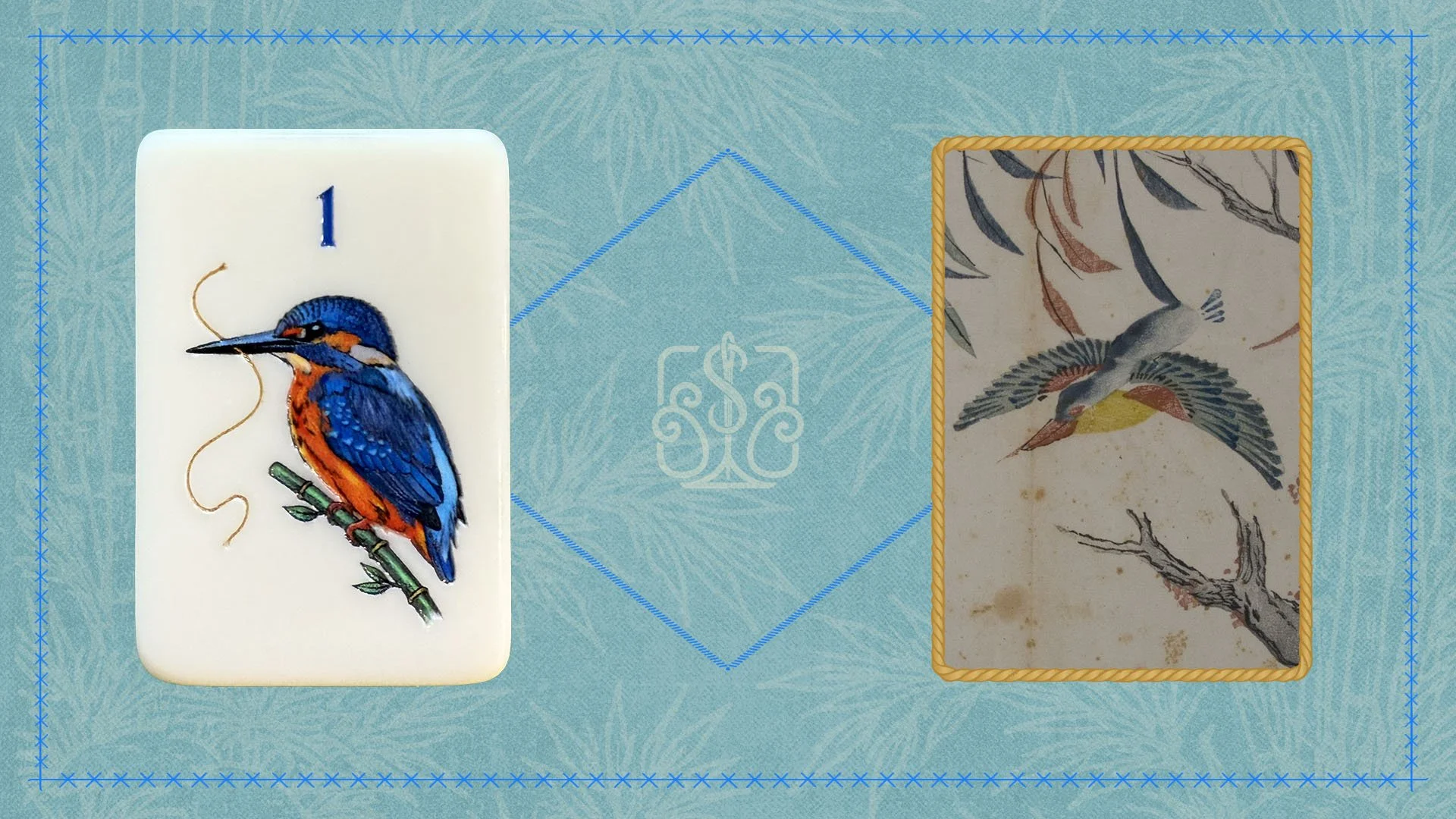
In the Origins Collection, the bamboo appears as skeins of green thread—upright and ordered, bound together by a strand of gold drawn from the kingfisher’s beak. Revered in Chinese decorative arts and long associated with the waters of the Nile, the kingfisher links these cultures. Bird, reed, and thread meet here in deliberate alignment.
Within the suit, a single skein in red marks the 3, 5, 7, and 9, providing a clear visual cue during play.
The Suits — Dot
The Shape of Continuity
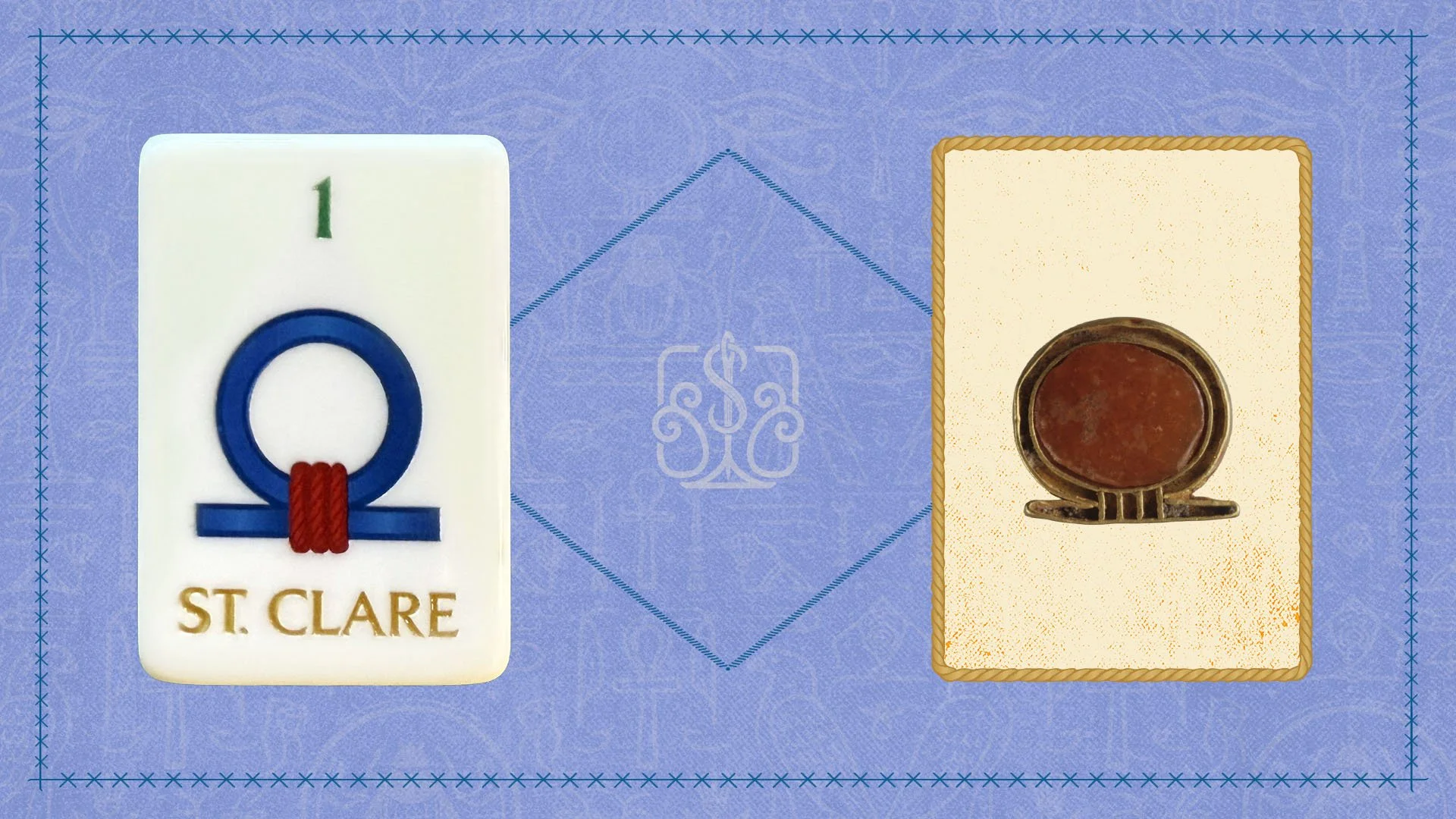
In ancient Egypt, the Shen ring was a symbol of eternity and divine protection, rendered as an unbroken loop of rope anchored at its base. It enclosed the names of kings and marked places of authority, its closed form signifying protection without end.
In China, the circle carried a parallel meaning — a sign of harmony, completeness, and the order of heaven. Simple in form yet expansive in meaning, it expressed continuity through balance.
Separated by geography and time, both cultures shaped the circle into a symbol of endurance. In this collection, that shared geometry is brought into alignment — a single form carrying layered histories.
On the tiles, continuous loops in blue thread define the even numbers, while red thread marks the odd, translating symbolism into structure at the table.
The Suits — Craks
“Where Script Meets Stitch”
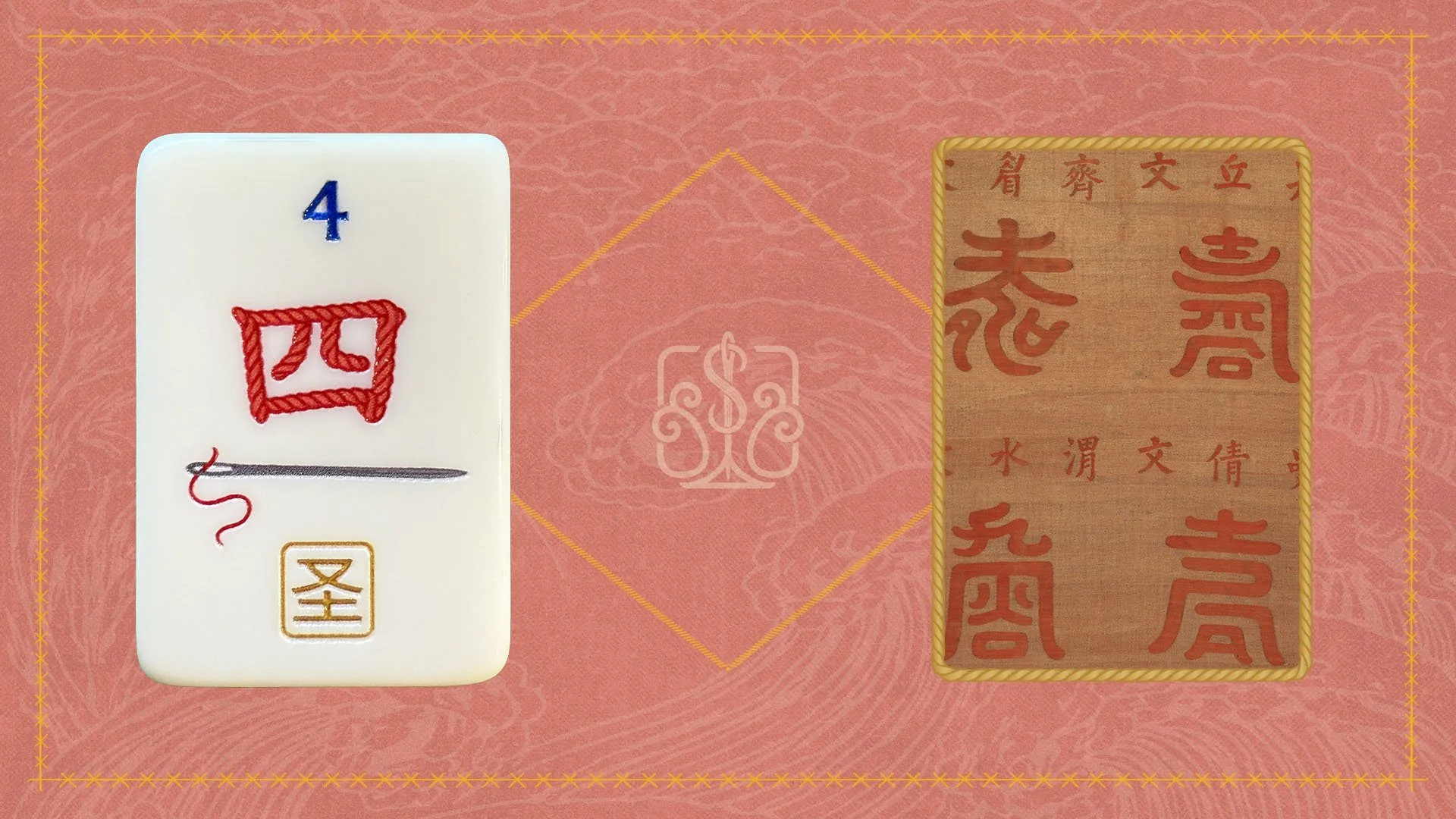
Each character begins as a single strand of red thread drawn through the eye of a needle. The forms are stitched rather than written, their lines constructed and held in tension. Thread placement alternates by number — right for odd, left for even — establishing a measured progression across the suit.
Here, the precision of mahjong’s script meets the discipline of early needlework traditions shaped centuries ago. Language and craft converge, joined by the thread that carries both structure and meaning.
At the base of each crak tile appears a character meaning “saint” or “wise person” — a subtle reminder that abundance is defined less by what we possess and more by how we live.
Winds & Dragons — Winds
Where Craft Finds Its Direction
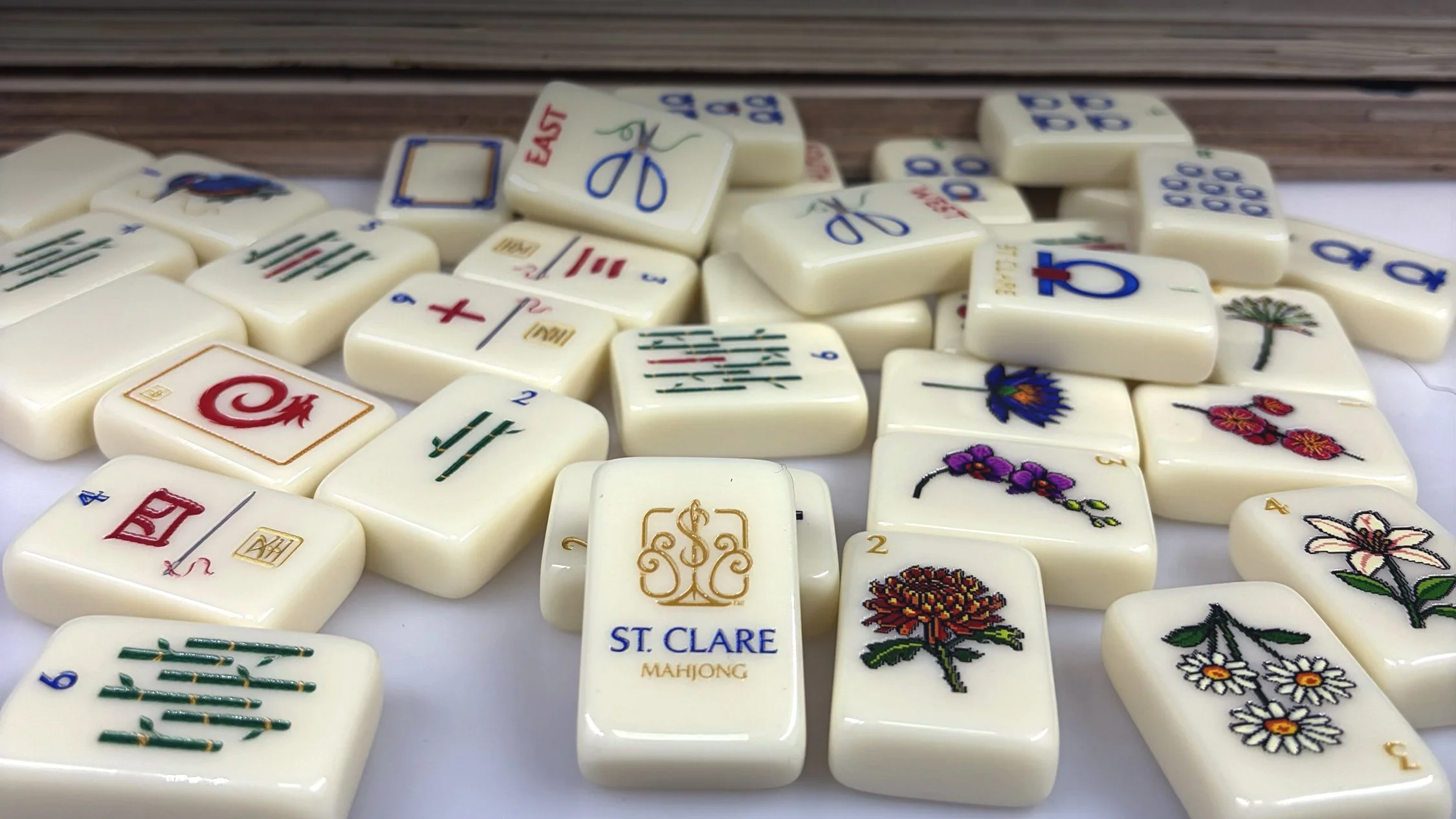
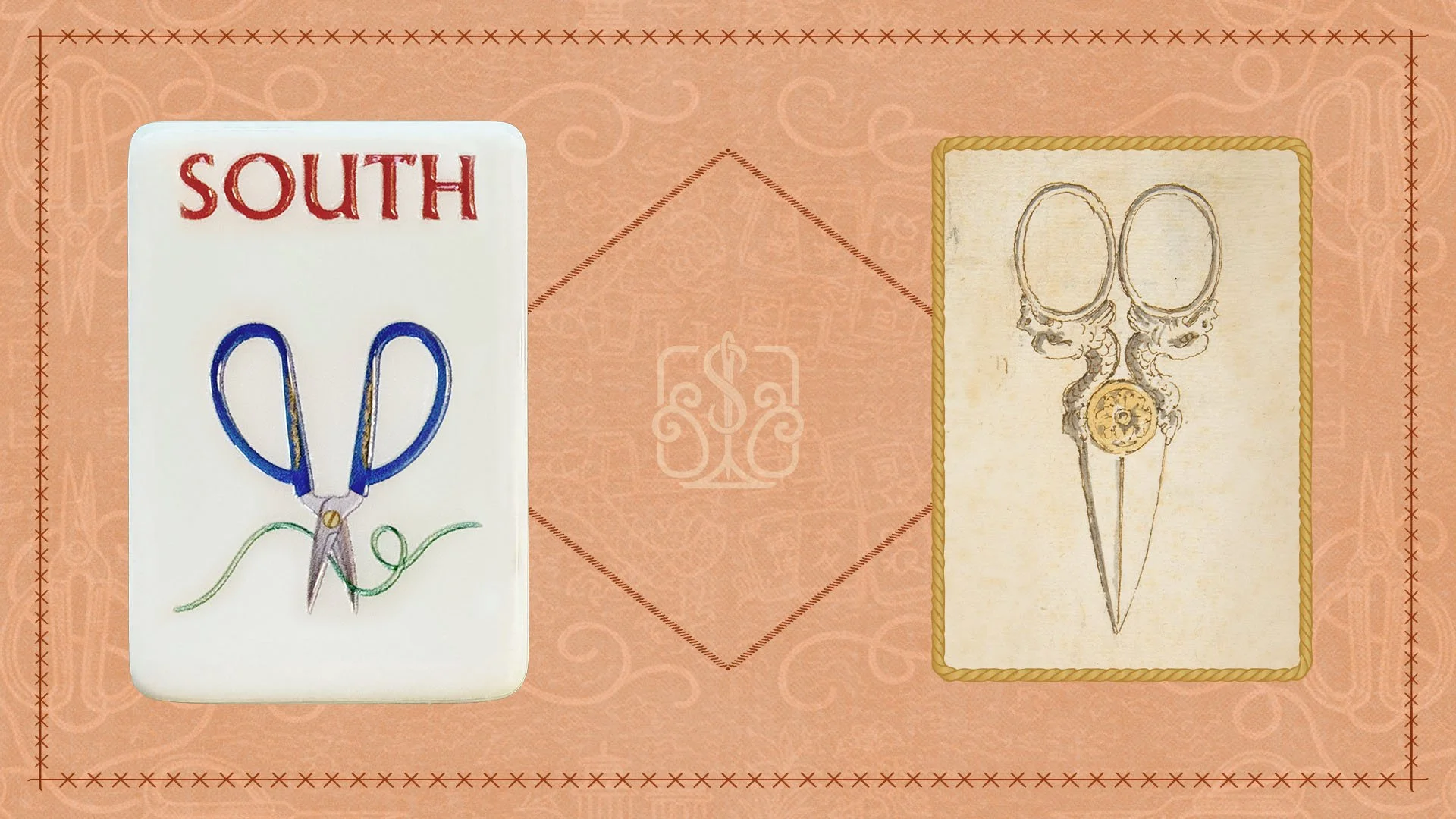
The Wind tiles are shaped as needlework scissors, oriented to each direction and paired with a strand of green thread. Inspired by early scissors crafted in ancient Egypt, they reference the essential tool that has long guided the work of the hand.
The thread arcs across each tile in a rhythm familiar to the needleworker, introducing motion while maintaining structure.
Winds & Dragons — Dragon
The Language of Dragons
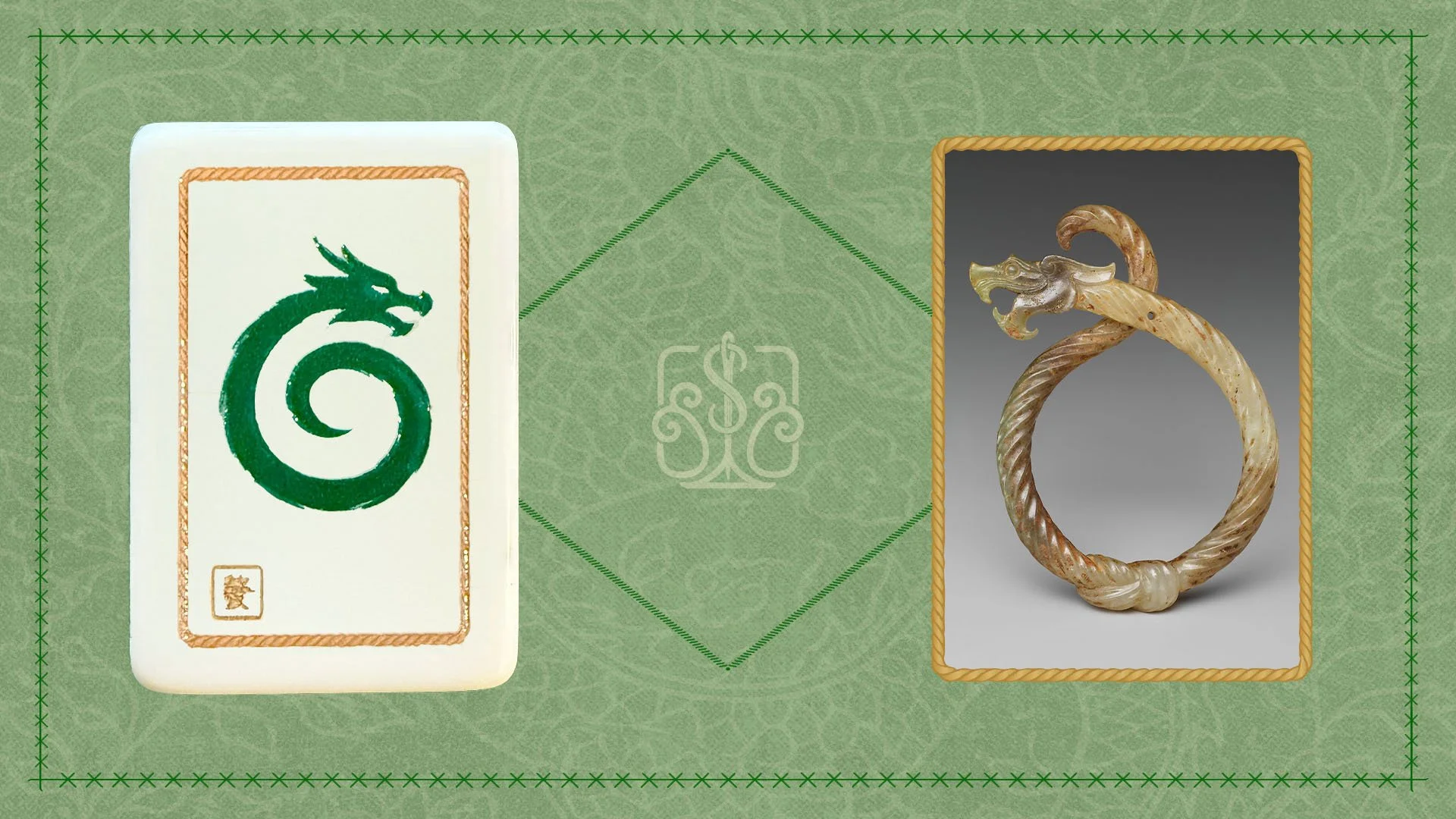
Dragons drawn in thread bring movement to the set while retaining their traditional meaning.
The red and green dragons appear as simplified forms, paired with their Chinese characters and framed in a fine gold border. In Chinese symbolism, red speaks to vitality and celebration, while green reflects growth and renewal.
The white dragon is defined by a restrained gold and blue thread border — a mark of purity and clarity that brings balance to the set.
Flowers & Joker — Flowers
Where Craft Finds Its Direction
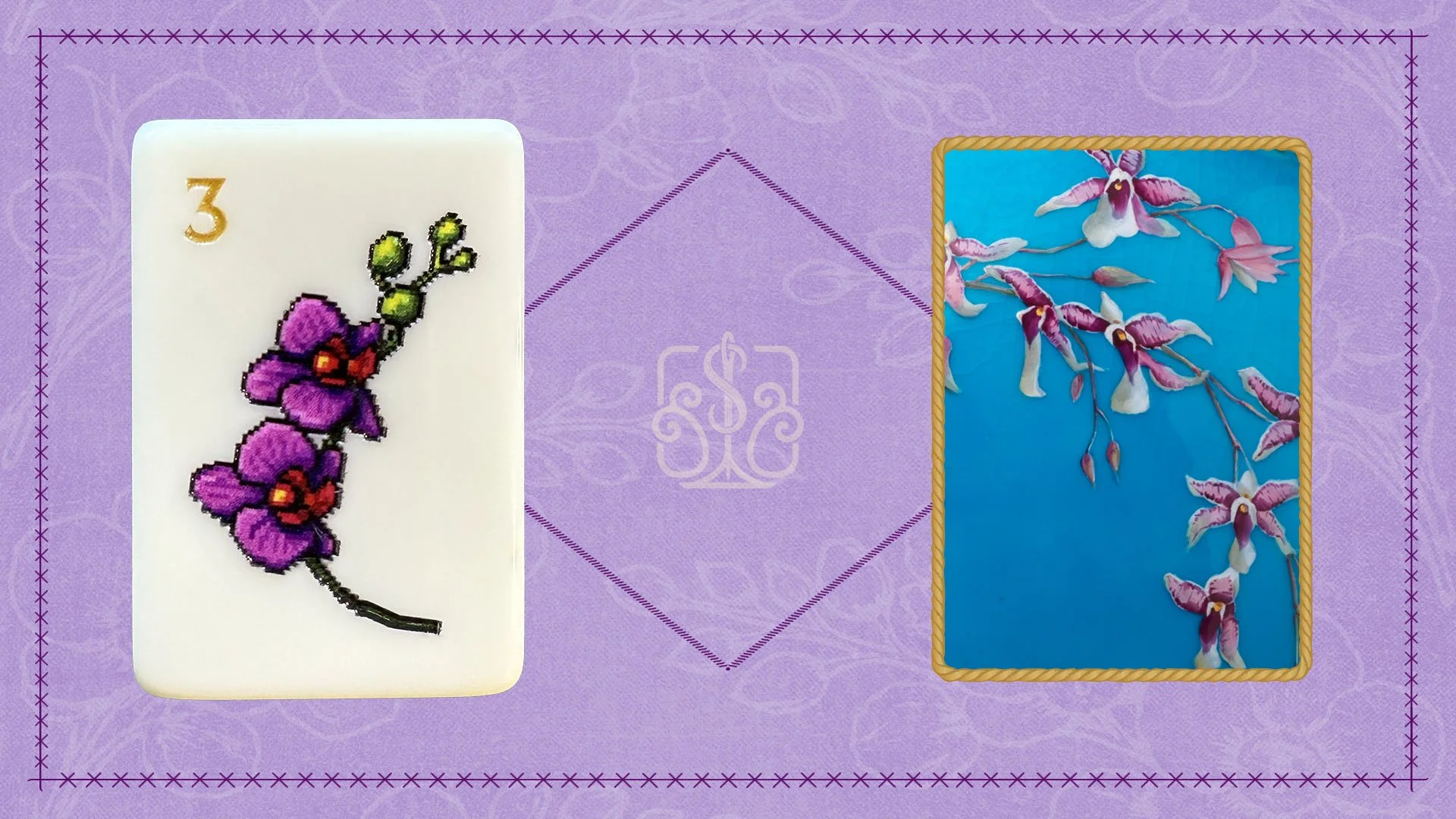
The Flower tiles are rendered as painted canvases, pairing traditional mahjong flowers with additional blooms selected from Egyptian history and needlework.
Orchid
Valued for its beauty and refinement, the orchid has long been linked to Chinese art and tradition.
Blue Lotus
One of the most revered flowers in ancient Egypt, valued for its fragrance and spiritual significance. It appeared frequently in temple carvings and in scenes of daily life.
Chrysanthemum
In Chinese culture, a sign of longevity and enduring character.
Lily
Representing Saint Clare, the lily serves as the namesake flower of the Origins Collection.
Plum Blossom
Blooming in winter, the plum blossom represents resilience and remains central to classic mahjong symbolism.
Jasmine
The jasmine signifies good fortune across Chinese and Egyptian traditions and honors South Carolina as the home of St. Clare Mahjong. As the spring bloom of the collection, it represents renewal and growth.
Daisy
Blooming in summer, the daisy appears in Egyptian ornamentation as a symbol of healing and care. In Chinese tradition, it reflects friendship — a nod to the community formed around the mahjong table.
Papyrus
A symbol of knowledge and continuity in ancient Egypt, papyrus reflects the preservation of history through written record. Appearing in the quiet turning of autumn, it speaks to the season of reflection and the gathering of wisdom.
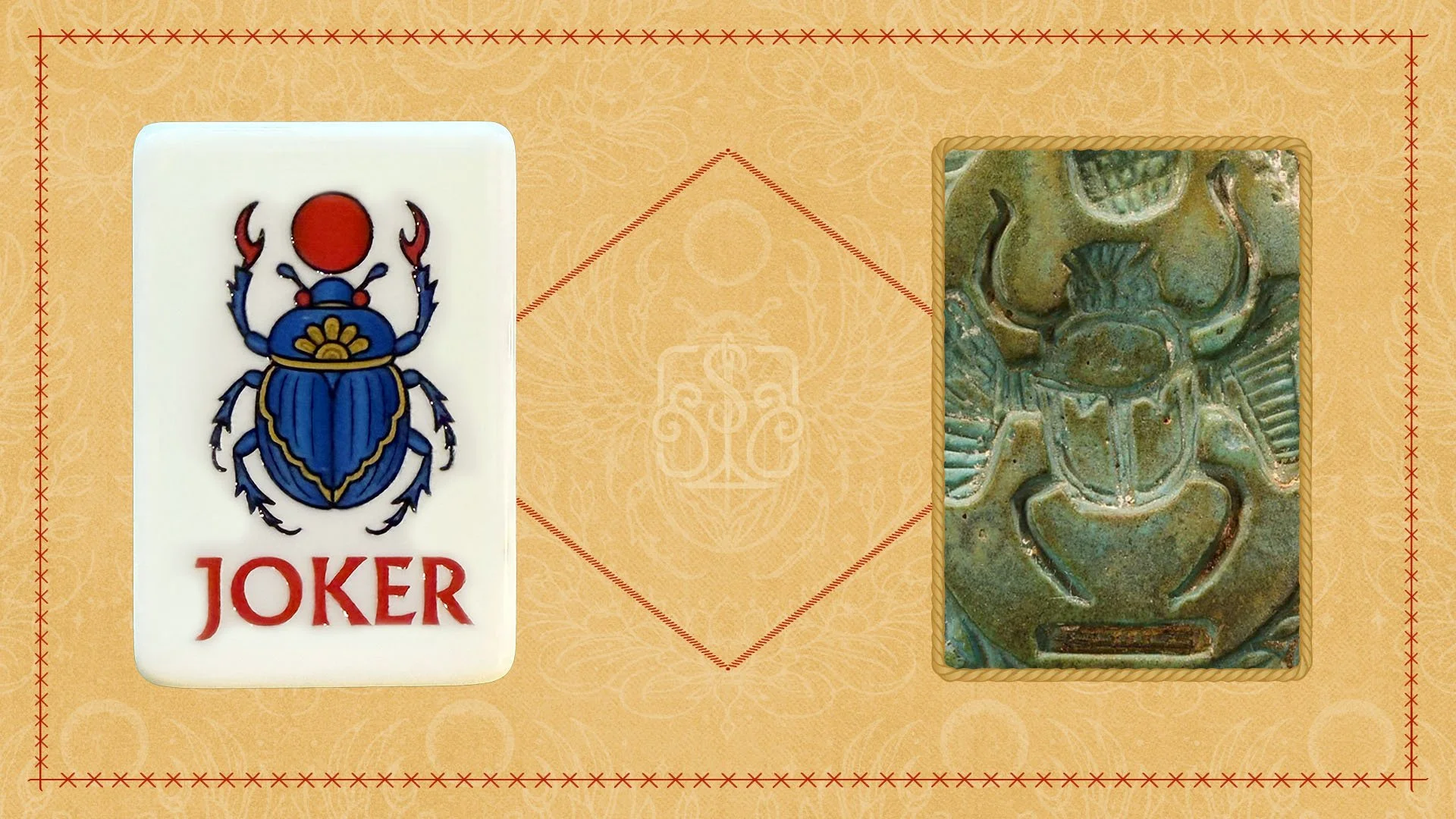
Flowers & Joker — Joker
Guardian of the Collection
The scarab beetle, a symbol of protection and good fortune in both Egyptian and Chinese traditions, anchors ourJoker tiles.
Within the Origins collection, it serves as a guardian — watchful, meaningful, and lucky.